

 Image 1 of 1
Fabric GSM, Weight & Stretch Reference Guide | Textile Sourcing & Apparel Design
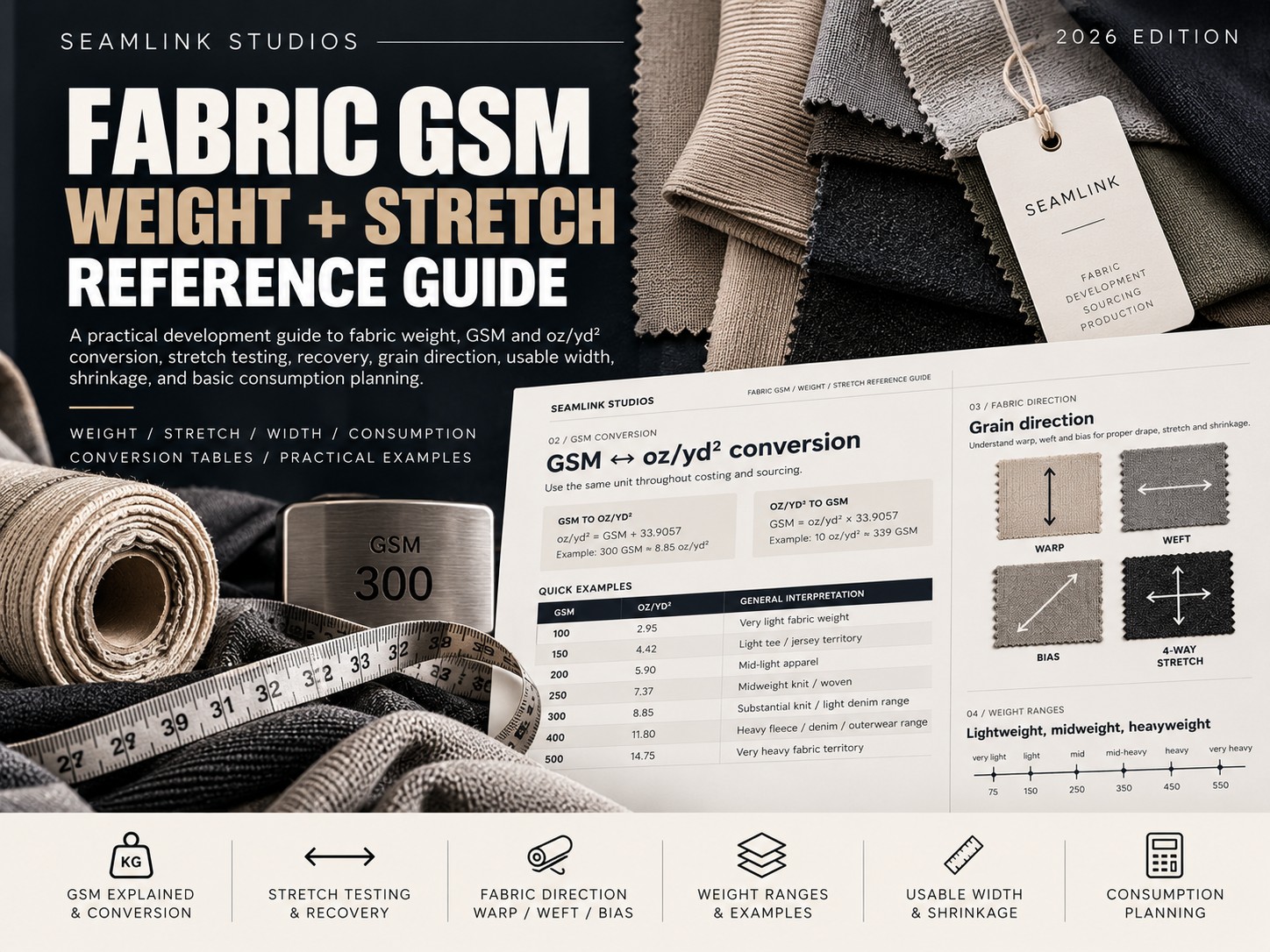
Fabric GSM, Weight & Stretch Reference Guide
Understand fabric weight, stretch, recovery, and consumption before choosing materials for your next clothing collection.
Choosing the right fabric involves more than its appearance or how it feels. Fabric weight, structure, stretch direction, recovery, shrinkage, and usable width can all affect garment fit, quality, construction, and manufacturing costs.
The SEAMLINK Fabric GSM, Weight & Stretch Reference Guide is a comprehensive 24-page technical PDF designed to help fashion designers, clothing brands, and apparel developers make more informed fabric sourcing and production decisions.
Whether you're developing heavyweight streetwear, lightweight garments, activewear, or everyday essentials, this guide explains essential fabric measurements and how they relate to garment development.
What's Inside
1. Understanding Fabric GSM & Weight
Learn what grams per square meter (GSM) actually measures, how it differs from fabric thickness, and why fabric construction matters when comparing materials.
2. GSM to oz/yd² Conversion Charts
Includes conversion formulas and a detailed reference table covering fabric weights from 50 to 650 GSM.
3. Lightweight, Midweight & Heavyweight Fabrics
Explore practical weight ranges and fabric examples for T-shirts, hoodies, sweatshirts, denim, outerwear, mesh, and other apparel categories.
4. Fabric Stretch & Recovery
Learn how to measure stretch percentages, evaluate fabric recovery, and identify residual growth that can affect garment fit.
5. 2-Way vs. 4-Way Stretch
Understand the differences between lengthwise and crosswise stretch, mechanical stretch, and elastane stretch.
6. Warp, Weft, Bias & Grain Direction
Explore how fabric orientation influences stretch, drape, stability, and garment performance.
7. Knit vs. Woven Fabric Structures
Compare common fabric constructions, including jersey, rib, interlock, ponte, French terry, fleece, and power mesh.
8. Fabric Width & Consumption
Understand the difference between full fabric width and usable cutting width, along with the basics of marker efficiency, material allowances, and estimated fabric consumption.
9. Fabric Shrinkage Calculations
Learn how to calculate shrinkage percentages and why dimensional changes must be considered during pattern development and production.
10. Fabric Specification Worksheet
Includes a practical worksheet to document material specifications such as composition, target GSM, usable width, stretch percentages, recovery, shrinkage, finishes, and approved references.
11. Quick Reference Cheat Sheet
A convenient reference page summarizing key formulas and fabric approval requirements.
Key Features
24-page technical PDF reference guide
GSM and oz/yd² conversion tables
Fabric weight classifications
Stretch and recovery calculation formulas
2-way and 4-way stretch explanations
Fabric grain and direction references
Knit and woven fabric comparisons
Width and fabric consumption guidance
Shrinkage calculations
Fabric specification worksheet
Quick reference cheat sheet
Who Is This For?
Independent fashion designers
Clothing brand owners
Fashion design students
Textile sourcing professionals
Product developers and patternmakers
Apparel production managers
Anyone learning about fabrics for garment manufacturing
What You'll Receive
Format: Digital PDF download
Length: 24 pages
Included: Technical reference tables, formulas, development guidance, fabric specification worksheet, and quick reference sheet.
Delivery: Instant digital download
Important Information
This is an educational reference guide, not an automated fabric calculator or laboratory testing service. Weight ranges are general development references, and actual fabric performance depends on fiber composition, construction, finishing, and testing conditions.
Final production specifications should be confirmed using approved material samples and appropriate testing.
Choose better fabrics. Understand technical specifications. Develop garments with confidence.
Digital product only. No physical product will be shipped.
Fabric GSM, Weight & Stretch Reference Guide
Understand fabric weight, stretch, recovery, and consumption before choosing materials for your next clothing collection.
Choosing the right fabric involves more than its appearance or how it feels. Fabric weight, structure, stretch direction, recovery, shrinkage, and usable width can all affect garment fit, quality, construction, and manufacturing costs.
The SEAMLINK Fabric GSM, Weight & Stretch Reference Guide is a comprehensive 24-page technical PDF designed to help fashion designers, clothing brands, and apparel developers make more informed fabric sourcing and production decisions.
Whether you're developing heavyweight streetwear, lightweight garments, activewear, or everyday essentials, this guide explains essential fabric measurements and how they relate to garment development.
What's Inside
1. Understanding Fabric GSM & Weight
Learn what grams per square meter (GSM) actually measures, how it differs from fabric thickness, and why fabric construction matters when comparing materials.
2. GSM to oz/yd² Conversion Charts
Includes conversion formulas and a detailed reference table covering fabric weights from 50 to 650 GSM.
3. Lightweight, Midweight & Heavyweight Fabrics
Explore practical weight ranges and fabric examples for T-shirts, hoodies, sweatshirts, denim, outerwear, mesh, and other apparel categories.
4. Fabric Stretch & Recovery
Learn how to measure stretch percentages, evaluate fabric recovery, and identify residual growth that can affect garment fit.
5. 2-Way vs. 4-Way Stretch
Understand the differences between lengthwise and crosswise stretch, mechanical stretch, and elastane stretch.
6. Warp, Weft, Bias & Grain Direction
Explore how fabric orientation influences stretch, drape, stability, and garment performance.
7. Knit vs. Woven Fabric Structures
Compare common fabric constructions, including jersey, rib, interlock, ponte, French terry, fleece, and power mesh.
8. Fabric Width & Consumption
Understand the difference between full fabric width and usable cutting width, along with the basics of marker efficiency, material allowances, and estimated fabric consumption.
9. Fabric Shrinkage Calculations
Learn how to calculate shrinkage percentages and why dimensional changes must be considered during pattern development and production.
10. Fabric Specification Worksheet
Includes a practical worksheet to document material specifications such as composition, target GSM, usable width, stretch percentages, recovery, shrinkage, finishes, and approved references.
11. Quick Reference Cheat Sheet
A convenient reference page summarizing key formulas and fabric approval requirements.
Key Features
24-page technical PDF reference guide
GSM and oz/yd² conversion tables
Fabric weight classifications
Stretch and recovery calculation formulas
2-way and 4-way stretch explanations
Fabric grain and direction references
Knit and woven fabric comparisons
Width and fabric consumption guidance
Shrinkage calculations
Fabric specification worksheet
Quick reference cheat sheet
Who Is This For?
Independent fashion designers
Clothing brand owners
Fashion design students
Textile sourcing professionals
Product developers and patternmakers
Apparel production managers
Anyone learning about fabrics for garment manufacturing
What You'll Receive
Format: Digital PDF download
Length: 24 pages
Included: Technical reference tables, formulas, development guidance, fabric specification worksheet, and quick reference sheet.
Delivery: Instant digital download
Important Information
This is an educational reference guide, not an automated fabric calculator or laboratory testing service. Weight ranges are general development references, and actual fabric performance depends on fiber composition, construction, finishing, and testing conditions.
Final production specifications should be confirmed using approved material samples and appropriate testing.
Choose better fabrics. Understand technical specifications. Develop garments with confidence.
Digital product only. No physical product will be shipped.