

 Image 1 of 1
China Apparel Manufacturing Guide 2026 | Clothing Factories, Sourcing & Production
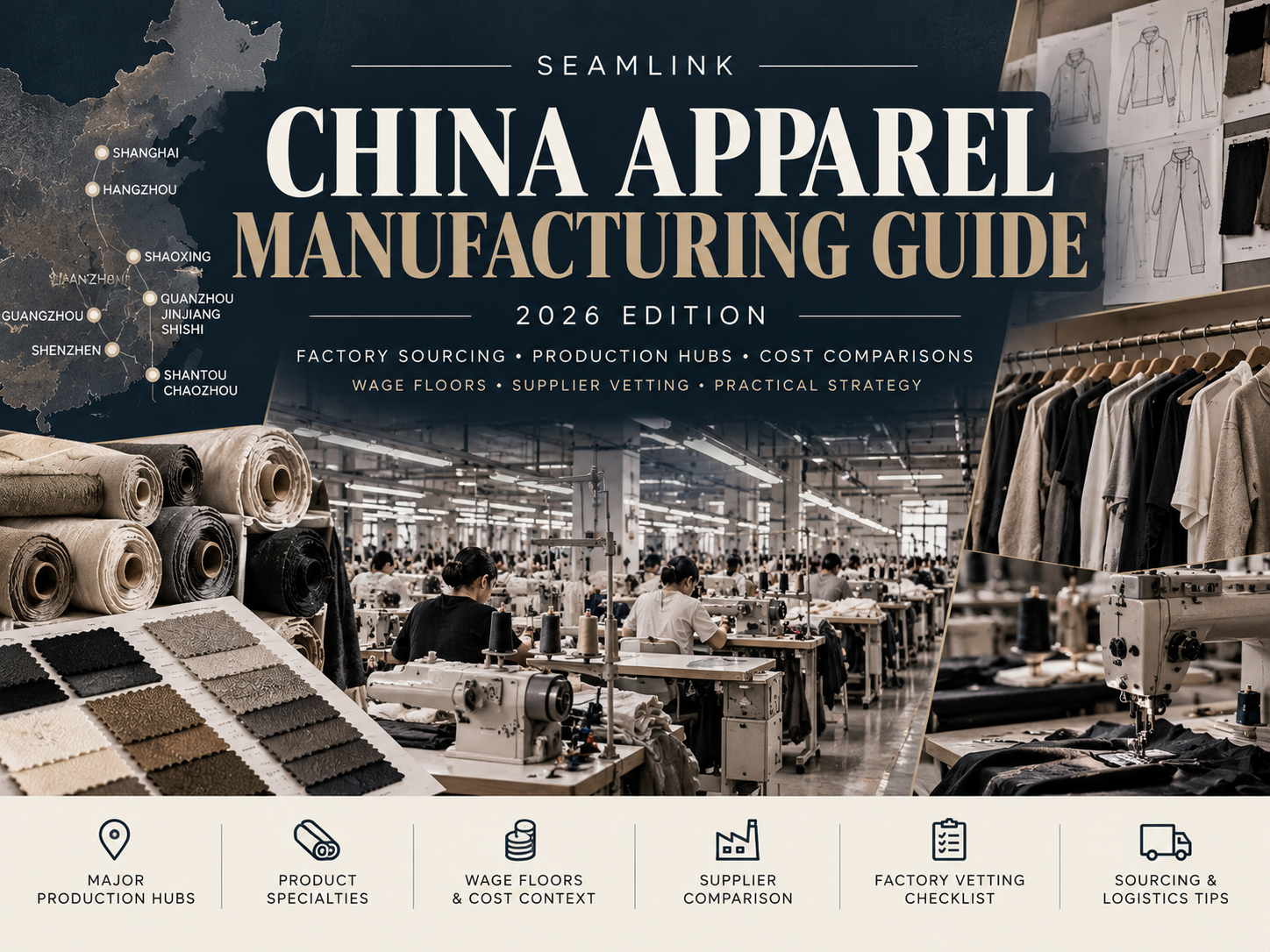
China Apparel Manufacturing Guide 2026
Discover where to manufacture your clothing in China and how to choose the right production partner for your brand.
China is one of the world's most established apparel manufacturing markets, but not every manufacturing city specializes in the same products.
Choosing the wrong factory or production region can lead to unnecessary costs, quality issues, sourcing delays, and manufacturing complications.
The SEAMLINK China Apparel Manufacturing Guide is a comprehensive 23-page digital resource designed to help fashion designers, clothing brands, and apparel entrepreneurs understand China's major garment manufacturing regions and make better sourcing decisions.
Whether you're launching your first clothing collection, searching for specialized manufacturers, or expanding an existing fashion business, this guide explains where different apparel categories are concentrated, how manufacturing costs work, and what to verify before committing to a factory.
What's Inside
1. China's Major Apparel Manufacturing Regions
Explore the specialties, sourcing advantages, and production considerations of key manufacturing hubs:
Guangzhou & Panyu: Fashion cut-and-sew, streetwear, womenswear, and garment development.
Dongguan, Humen & Dalang: Womenswear, sweaters, knitwear, and specialized knitting production.
Shenzhen: Technical development, product engineering, sourcing coordination, and advanced apparel projects.
Shantou & Chaozhou: Lingerie, underwear, homewear, bridalwear, and embellished garments.
Shanghai: Premium fashion development, design, and supplier coordination.
Hangzhou: Contemporary womenswear, fashion merchandising, and e-commerce-driven production.
Shaoxing & Keqiao: Fabric sourcing, textile manufacturing, printing, dyeing, and finishing.
Quanzhou, Jinjiang & Shishi: Sportswear, footwear, performance textiles, and casual apparel.
2. Manufacturing Cost & Wage Comparisons
Understand China's regional statutory minimum-wage differences and why lower local wages don't always translate into cheaper garment production.
Learn how material costs, construction complexity, labor efficiency, subcontracting, and logistics contribute to manufacturing expenses.
3. Product-to-Manufacturing-City Guide
Use a category comparison chart to identify suitable manufacturing clusters for streetwear, womenswear, sweaters, lingerie, denim, sportswear, footwear, and specialty fabrics.
4. Factory Selection & Supplier Vetting
Learn seven important criteria for evaluating manufacturers, including category specialization, sample-room capability, MOQs, production capacity, communication, quality control, and commercial terms.
5. Factory Vetting Checklist
Use a structured checklist to review supplier information, factory ownership, production capabilities, material sourcing, testing, quality standards, payment arrangements, and shipment responsibilities.
6. Garment Production Workflow
Follow a practical manufacturing process from initial design and technical specifications through sourcing, sampling, approvals, bulk production, quality control, shipping, and final delivery.
7. China-to-U.S. Shipping Overview
Understand basic air and sea freight options, shipping responsibilities, customs considerations, and documentation requirements.
8. Supplier Comparison Worksheets
Includes practical tools for organizing supplier shortlists, comparing factory quotations, confirming production requirements, and documenting approval decisions.
Who Is This Guide For?
Independent fashion designers
New and established clothing brands
Streetwear and contemporary fashion labels
Apparel entrepreneurs sourcing from China
Product developers and production managers
Fashion design students
Businesses exploring overseas garment manufacturing
What You'll Receive
23-page professionally designed PDF guide
Regional manufacturing profiles and illustrations
2026 statutory minimum-wage reference chart
Product-to-city sourcing comparison
Factory selection and vetting checklist
Manufacturing quotation comparison framework
Production workflow guidance
Supplier-shortlisting worksheet
Official references and research notes
Format: Digital PDF download
Edition: 2026, research reviewed October 10, 2026
Delivery:
China Apparel Manufacturing Guide 2026
Discover where to manufacture your clothing in China and how to choose the right production partner for your brand.
China is one of the world's most established apparel manufacturing markets, but not every manufacturing city specializes in the same products.
Choosing the wrong factory or production region can lead to unnecessary costs, quality issues, sourcing delays, and manufacturing complications.
The SEAMLINK China Apparel Manufacturing Guide is a comprehensive 23-page digital resource designed to help fashion designers, clothing brands, and apparel entrepreneurs understand China's major garment manufacturing regions and make better sourcing decisions.
Whether you're launching your first clothing collection, searching for specialized manufacturers, or expanding an existing fashion business, this guide explains where different apparel categories are concentrated, how manufacturing costs work, and what to verify before committing to a factory.
What's Inside
1. China's Major Apparel Manufacturing Regions
Explore the specialties, sourcing advantages, and production considerations of key manufacturing hubs:
Guangzhou & Panyu: Fashion cut-and-sew, streetwear, womenswear, and garment development.
Dongguan, Humen & Dalang: Womenswear, sweaters, knitwear, and specialized knitting production.
Shenzhen: Technical development, product engineering, sourcing coordination, and advanced apparel projects.
Shantou & Chaozhou: Lingerie, underwear, homewear, bridalwear, and embellished garments.
Shanghai: Premium fashion development, design, and supplier coordination.
Hangzhou: Contemporary womenswear, fashion merchandising, and e-commerce-driven production.
Shaoxing & Keqiao: Fabric sourcing, textile manufacturing, printing, dyeing, and finishing.
Quanzhou, Jinjiang & Shishi: Sportswear, footwear, performance textiles, and casual apparel.
2. Manufacturing Cost & Wage Comparisons
Understand China's regional statutory minimum-wage differences and why lower local wages don't always translate into cheaper garment production.
Learn how material costs, construction complexity, labor efficiency, subcontracting, and logistics contribute to manufacturing expenses.
3. Product-to-Manufacturing-City Guide
Use a category comparison chart to identify suitable manufacturing clusters for streetwear, womenswear, sweaters, lingerie, denim, sportswear, footwear, and specialty fabrics.
4. Factory Selection & Supplier Vetting
Learn seven important criteria for evaluating manufacturers, including category specialization, sample-room capability, MOQs, production capacity, communication, quality control, and commercial terms.
5. Factory Vetting Checklist
Use a structured checklist to review supplier information, factory ownership, production capabilities, material sourcing, testing, quality standards, payment arrangements, and shipment responsibilities.
6. Garment Production Workflow
Follow a practical manufacturing process from initial design and technical specifications through sourcing, sampling, approvals, bulk production, quality control, shipping, and final delivery.
7. China-to-U.S. Shipping Overview
Understand basic air and sea freight options, shipping responsibilities, customs considerations, and documentation requirements.
8. Supplier Comparison Worksheets
Includes practical tools for organizing supplier shortlists, comparing factory quotations, confirming production requirements, and documenting approval decisions.
Who Is This Guide For?
Independent fashion designers
New and established clothing brands
Streetwear and contemporary fashion labels
Apparel entrepreneurs sourcing from China
Product developers and production managers
Fashion design students
Businesses exploring overseas garment manufacturing
What You'll Receive
23-page professionally designed PDF guide
Regional manufacturing profiles and illustrations
2026 statutory minimum-wage reference chart
Product-to-city sourcing comparison
Factory selection and vetting checklist
Manufacturing quotation comparison framework
Production workflow guidance
Supplier-shortlisting worksheet
Official references and research notes
Format: Digital PDF download
Edition: 2026, research reviewed October 10, 2026
Delivery: